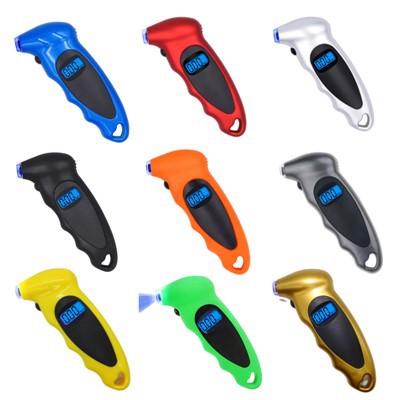
Are there any standards for ball pressure gauges? This is a question that often arises among those in industries where accurate pressure measurement is crucial. As a supplier of ball pressure gauges, I've had extensive experience with these instruments and understand the importance of standards in ensuring their reliability and accuracy.
The Significance of Standards in Ball Pressure Gauges
Standards play a pivotal role in the manufacturing and use of ball pressure gauges. They provide a common framework that manufacturers can follow to ensure that their products meet certain quality and performance criteria. These standards cover various aspects of ball pressure gauges, including design, materials, accuracy, and calibration.
One of the primary reasons for having standards is to ensure the safety of users. Ball pressure gauges are used in a wide range of applications, from automotive to industrial settings. Inaccurate pressure readings can lead to serious consequences, such as equipment failure, accidents, or even injuries. By adhering to standards, manufacturers can minimize the risk of these issues occurring.
Standards also help to promote interoperability and compatibility between different ball pressure gauges. In many industries, multiple gauges may be used in a single system, and it's essential that they can work together seamlessly. Standards ensure that gauges from different manufacturers can provide consistent and comparable readings, making it easier for users to integrate them into their existing setups.
International and Industry - Specific Standards
There are several international standards that govern the manufacturing of ball pressure gauges. For example, the International Organization for Standardization (ISO) has developed a series of standards related to pressure measurement instruments. These standards provide guidelines on everything from the design and construction of gauges to the methods of calibration and testing.
In addition to international standards, there are also industry - specific standards. In the automotive industry, for instance, ball pressure gauges used to measure tire pressure must meet certain requirements. These requirements are designed to ensure that the gauges can accurately measure the pressure within the recommended range for different types of tires.
The American Society of Mechanical Engineers (ASME) also has standards for pressure gauges. These standards are widely recognized in the United States and many other countries. They cover aspects such as the accuracy class of the gauge, the materials used in its construction, and the markings and labels that should be present on the gauge.
Our Product Range and Compliance
As a ball pressure gauge supplier, we are committed to meeting and exceeding these standards. Our product range includes a variety of ball pressure gauges designed for different applications.
For automotive use, we offer high - quality tire pressure gauges. Our Pencil Tire Gauge is a popular choice among consumers. It is compact, easy to use, and provides accurate pressure readings. The design of this gauge adheres to automotive industry standards, ensuring that it can accurately measure tire pressure within the typical range for passenger vehicles.
Another product in our automotive lineup is the Pocket Size Dual Foot Gauge. This gauge is not only convenient to carry around but also offers dual - foot measurement capabilities. It is calibrated to meet the accuracy requirements set by relevant automotive standards, providing reliable readings for different tire types.
For standard passenger vehicles, our Standard Passenger Tire Gauge is a reliable option. It is designed to be user - friendly and provides accurate pressure measurements within the range commonly found in passenger car tires. This gauge is manufactured in accordance with industry standards to ensure its quality and performance.
Calibration and Maintenance Standards
Calibration is a critical aspect of ensuring the accuracy of ball pressure gauges. Standards specify the frequency and methods of calibration. Generally, ball pressure gauges should be calibrated regularly to maintain their accuracy. The calibration process involves comparing the gauge's readings with a known standard pressure source.
Maintenance is also important for the proper functioning of ball pressure gauges. Standards may provide guidelines on how to clean, store, and handle the gauges to prevent damage and ensure their longevity. For example, gauges should be stored in a clean and dry environment, and they should be protected from excessive vibration and shock.
Quality Control in Manufacturing
At our manufacturing facilities, we have a rigorous quality control process in place to ensure that our ball pressure gauges meet all relevant standards. Every gauge undergoes a series of tests before it leaves the factory. These tests include accuracy testing, pressure - cycle testing, and durability testing.
During accuracy testing, the gauge is compared against a highly accurate reference gauge to ensure that its readings are within the acceptable tolerance range. Pressure - cycle testing involves subjecting the gauge to repeated pressure changes to simulate real - world usage and ensure that it can maintain its accuracy over time. Durability testing checks the gauge's resistance to physical damage, such as impact and corrosion.
The Role of Standards in Customer Confidence
Standards are not only important for ensuring the quality of our products but also for building customer confidence. When customers purchase a ball pressure gauge from us, they can be assured that it has been manufactured to meet the highest standards. This gives them peace of mind knowing that they are getting a reliable and accurate instrument.
In addition, standards help us to communicate the features and capabilities of our products more effectively. By referring to specific standards, we can clearly explain to customers what they can expect from our ball pressure gauges in terms of accuracy, performance, and durability.


Contact Us for Your Ball Pressure Gauge Needs
If you are in the market for high - quality ball pressure gauges, look no further. Our products are designed and manufactured to meet the strictest standards, ensuring their reliability and accuracy. Whether you need a gauge for automotive, industrial, or other applications, we have the right solution for you.
We are always ready to discuss your specific requirements and provide you with the best advice on choosing the appropriate ball pressure gauge. Contact us today to start a conversation about your procurement needs. We look forward to working with you to meet your pressure measurement requirements.
References
- International Organization for Standardization (ISO) standards related to pressure measurement instruments.
- American Society of Mechanical Engineers (ASME) standards for pressure gauges.
- Automotive industry standards for tire pressure gauges.