


When it comes to maintaining and servicing tires, one often overlooked but crucial component is the extension tire valve. As a leading supplier of extension tire valves, I've encountered numerous inquiries regarding the typical length of these essential tools. In this blog post, I'll delve into the factors that influence the length of extension tire valves, explore the common lengths available in the market, and discuss how to choose the right length for your specific needs.
Understanding Extension Tire Valves
Before we dive into the length aspect, let's briefly understand what extension tire valves are and why they are important. Extension tire valves are additional components that are attached to the standard tire valve stem. They serve several purposes, including making it easier to access the valve for inflation and deflation, especially in situations where the standard valve stem is difficult to reach. This is particularly useful in vehicles with deep-set wheels, dual tires, or in industrial applications where tires are mounted in hard-to-reach locations.

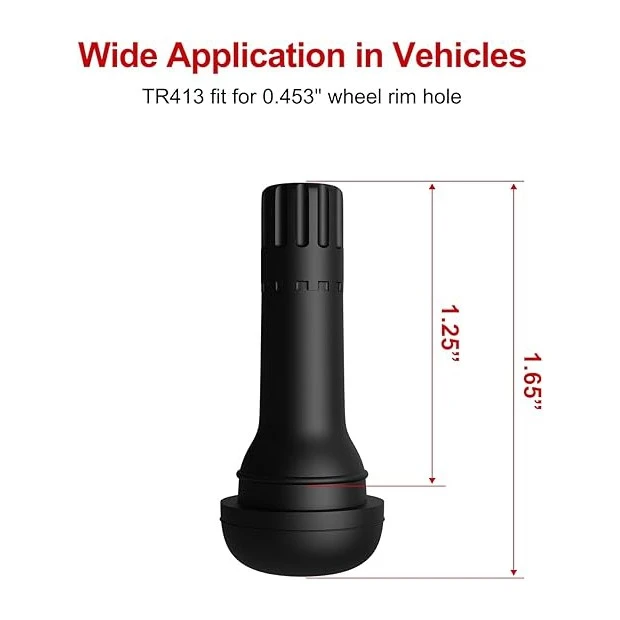
Factors Influencing the Length of Extension Tire Valves
The length of an extension tire valve is not arbitrary; it is determined by several factors that take into account the specific requirements of the application. Here are some of the key factors:
Wheel Design and Configuration
The design of the wheel plays a significant role in determining the length of the extension tire valve. Wheels with deep offsets or those that are part of a dual-tire setup often require longer extensions to ensure that the valve is accessible. For example, in heavy-duty trucks with dual rear wheels, the inner tire's valve stem can be quite recessed, necessitating an extension that can reach beyond the outer tire.
Tire Type and Application
Different types of tires and their applications also influence the length of the extension valve. Off-road vehicles, for instance, may have larger tires with thicker sidewalls, which could require a longer extension to reach the valve. Similarly, industrial vehicles such as forklifts or construction equipment may have unique tire configurations that call for specific valve lengths.
Accessibility Requirements
The ease of access to the tire valve is another crucial factor. If the valve is located in a confined space or behind other components, a longer extension will be needed to allow for easy inflation and deflation. Additionally, in applications where the valve needs to be accessed frequently, such as in a high-volume tire service center, a length that provides optimal accessibility is essential.
Common Lengths of Extension Tire Valves
Extension tire valves come in a variety of lengths to accommodate different needs. Here are some of the most common lengths available in the market:
Short Extensions (2 - 4 inches)
Short extensions are typically used in situations where only a slight increase in valve accessibility is required. They are commonly found in passenger cars and light trucks with standard wheel designs. These short extensions are ideal for wheels with a minimal offset or when the valve stem is just slightly difficult to reach.
Medium Extensions (4 - 8 inches)
Medium-length extensions are more versatile and can be used in a wider range of applications. They are suitable for vehicles with moderately deep-set wheels, such as some SUVs and vans. Medium extensions also work well in dual-tire setups where the inner tire's valve needs to be accessed without removing the outer tire.
Long Extensions (8 inches or more)
Long extensions are designed for extreme situations where the valve stem is located deep within the wheel or in hard-to-reach locations. They are commonly used in heavy-duty trucks, industrial equipment, and off-road vehicles. Long extensions ensure that the valve is easily accessible, even in the most challenging tire configurations.
Choosing the Right Length of Extension Tire Valve
Selecting the appropriate length of extension tire valve is crucial to ensure proper functionality and ease of use. Here are some tips to help you make the right choice:
Measure the Distance
Before purchasing an extension tire valve, measure the distance from the valve stem to the point where you need to access it. This will give you a clear idea of the length required. Make sure to account for any obstacles or components that may obstruct the access.
Consider the Application
Think about the specific application of the tire. If it's for a vehicle that is driven mostly on the road, a shorter or medium-length extension may be sufficient. However, if it's for an off-road vehicle or heavy-duty equipment, a longer extension may be necessary.
Check Compatibility
Ensure that the extension tire valve is compatible with your tire's valve stem and the inflation equipment you use. Different valves may have different thread sizes and connection types, so it's important to choose an extension that fits properly.
Our Range of Extension Tire Valves
As a trusted supplier of extension tire valves, we offer a comprehensive range of products in various lengths to meet the diverse needs of our customers. Our extension tire valves are made from high-quality materials to ensure durability and reliability. Whether you need a short extension for your passenger car or a long one for your heavy-duty truck, we have the right solution for you.
In addition to extension tire valves, we also offer a wide selection of Snap-in Tire Valve and Tire Valve Tool to help you with your tire maintenance and repair needs. Our products are designed to meet the highest industry standards and are backed by our commitment to excellent customer service.
Conclusion
The length of a typical extension tire valve varies depending on several factors, including wheel design, tire type, and accessibility requirements. By understanding these factors and considering your specific needs, you can choose the right length of extension tire valve to ensure proper tire maintenance and service. At our company, we are dedicated to providing high-quality extension tire valves and related products to our customers. If you have any questions or need assistance in selecting the right product, please don't hesitate to contact us. We look forward to helping you with your tire valve needs.
References
- Tire Industry Association. (2023). Tire maintenance and service guidelines.
- Smith, J. (2022). The importance of proper tire valve selection. Journal of Automotive Technology.


