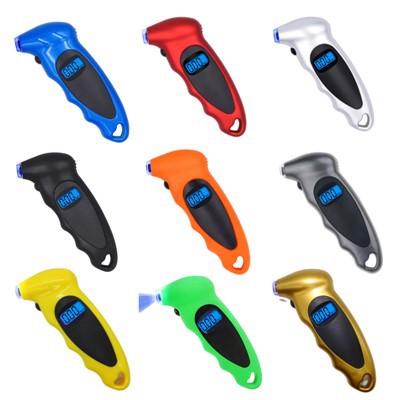
When it comes to maintaining the safety and efficiency of your vehicle, one often overlooked yet crucial tool is the pencil tire gauge. As a seasoned supplier of pencil tire gauges, I've encountered numerous customers querying about the difference between basic and premium models. In this blog, I'll delve into the key disparities to help you make an informed decision for your tire - pressure monitoring needs.
Design and Build Quality
The most apparent difference between basic and premium pencil tire gauges lies in their design and build quality. Basic pencil tire gauges are generally crafted with cost - effectiveness in mind. They are typically made from simple plastic materials. These plastics may not be of the highest grade, which means they can be prone to cracking or breaking if dropped or exposed to harsh environmental conditions.
On the other hand, premium pencil tire gauges often feature high - quality materials. Metals such as stainless steel or chrome - plated brass are commonly used for the outer casing. These materials not only offer better durability but also provide a more luxurious and professional look. For instance, a stainless - steel - cased premium gauge can resist corrosion from moisture and road salts, ensuring a longer lifespan. In addition, the internal components of premium gauges are more precisely engineered, with better tolerance and fitting, which helps to maintain accuracy over a longer period.
Measurement Accuracy
Accuracy is of utmost importance when it comes to measuring tire pressure. Basic pencil tire gauges usually have a lower level of precision. They may have an accuracy range of around ±3 psi. This means that if your gauge reads 32 psi, the actual tire pressure could be anywhere between 29 psi and 35 psi. While this level of accuracy may be sufficient for some casual users, it can lead to issues if you need a very precise tire pressure reading, especially for high - performance vehicles.
Premium pencil tire gauges, however, are designed to offer a much higher level of accuracy. Many premium models have an accuracy range of ±1 psi or even less. This high precision allows you to maintain the optimal tire pressure recommended by the vehicle manufacturer, which can improve fuel efficiency, extend tire lifespan, and enhance overall driving safety.
Ease of Use
The ease of use is another significant factor differentiating basic and premium pencil tire gauges. Basic gauges often have simple designs with small and hard - to - read markings. The pressure indicator may not be very prominent, making it difficult to get an accurate reading, especially in low - light conditions. Some basic gauges also have a stiff connection to the tire valve, which can make it challenging to get a proper seal and take a reading.
Premium pencil tire gauges are designed with user - friendliness in mind. They typically have large, easy - to - read markings, often with fluorescent or backlit features for better visibility in all lighting conditions. The connection to the tire valve is usually smooth and easy to attach, ensuring a proper seal every time. Additionally, some premium gauges come with a built - in bleeder valve, which allows you to quickly release excess pressure from the tire without having to remove the gauge.
Additional Features
Premium pencil tire gauges often come with a range of additional features that basic models lack. One such feature is the ability to measure different units of pressure. Most vehicles specify tire pressure in psi (pounds per square inch), but some imported or high - end vehicles may use other units like kPa (kilopascals) or bar. Premium gauges can easily switch between these units, providing greater flexibility.
Another useful feature is the shock - proof design. These gauges are built to withstand accidental drops and impacts, ensuring that they remain functional even after a mishap. Some premium gauges may also include a carrying case or a clip for easy storage and attachment to your keychain or toolbox.
In contrast, basic pencil tire gauges usually have a single - unit measurement and lack any significant additional features beyond the basic function of measuring tire pressure.


Price
As you might expect, price is a major differentiator between basic and premium pencil tire gauges. Basic gauges are much more affordable, usually costing between $5 and $15. They are a popular choice for budget - conscious consumers who only need a simple tool for occasional tire pressure checks.
Premium pencil tire gauges, on the other hand, can cost anywhere from $20 to $50 or more. The higher price is justified by the superior build quality, accuracy, additional features, and longer lifespan. If you're a professional mechanic, a car enthusiast, or someone who values precision and reliability, investing in a premium gauge is well worth it.
Which One to Choose
Choosing between a basic and a premium pencil tire gauge depends on your specific needs and usage. If you're an average driver who only checks your tire pressure once in a while and doesn't mind a bit of imprecision, a basic gauge is a cost - effective option. It can still provide you with a general idea of your tire pressure and help you maintain safe driving conditions. You can explore our Mini Tire Gauge and Economy Tire Air Gauge for basic yet practical solutions.
However, if you own a high - performance vehicle, are a professional in the automotive industry, or simply want the best possible tool for accurate tire pressure monitoring, a premium gauge is the way to go. Our Handle Type Tire Pressure Gauge offers the high - end features and quality you need.
Conclusion
In conclusion, the difference between a basic and a premium pencil tire gauge is significant in terms of design, accuracy, ease of use, additional features, and price. As a trusted supplier of pencil tire gauges, we understand the importance of having the right tool for the job. Whether you're looking for an affordable basic gauge or a high - end premium model, we have a wide range of products to meet your needs.
If you're interested in learning more about our pencil tire gauges or are looking to make a purchase, we encourage you to contact us for further discussion. Our team of experts is ready to assist you in finding the perfect tire gauge for your requirements.
References
- Automotive Tire Manual, Rubber Manufacturers Association.
- Tire Pressure Monitoring System Guidelines, National Highway Traffic Safety Administration.