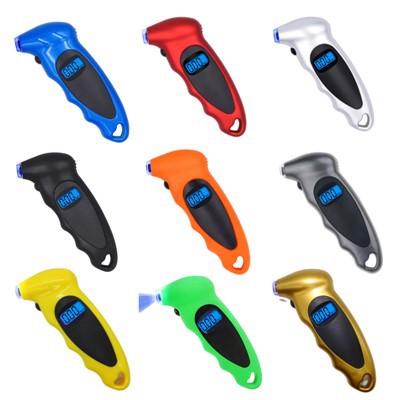
Hey there! As a supplier of ball pressure gauges, I get a lot of questions about the working range of these nifty tools. So, let's dive right in and chat about what you can expect from a typical ball pressure gauge.
First off, a ball pressure gauge is a simple yet effective device used to measure the pressure inside tires. It's a handy tool for car owners, truck drivers, bike enthusiasts - pretty much anyone who has to deal with inflating and maintaining the correct pressure in their tires. You know, keeping the right tire pressure isn't just about convenience; it's crucial for safety, fuel efficiency, and the overall lifespan of your tires.
So, what's the working range of a typical ball pressure gauge? Well, most standard ball pressure gauges are designed to measure pressures in the range of about 0 to 60 psi (pounds per square inch). That range covers the majority of everyday tire applications. For example, your average passenger car tires usually have a recommended pressure between 30 and 35 psi. So, a gauge with a 0 - 60 psi range is perfect for keeping tabs on these tires. You can easily check if your tires are under - inflated, over - inflated, or just right within this range.
If you're into smaller vehicles like bicycles, the working range of a ball pressure gauge is still useful. Bicycle tires generally require pressures anywhere from 30 to 90 psi, depending on the type of bike. For road bikes, you might need higher pressures, around 80 - 90 psi, to reduce rolling resistance. And for mountain bikes, pressures between 30 and 50 psi are more common to provide better traction on uneven terrain. Some ball pressure gauges can handle these higher pressures and can go up to 100 psi or even a bit more, but those are less common for the standard home - use models.
Truck and SUV tires usually have higher pressure requirements. They can range from 35 to 80 psi, depending on the size and load - carrying capacity of the vehicle. A ball pressure gauge with a 0 - 100 psi working range can be great for these larger vehicles. It allows you to accurately measure the often - higher pressures needed to support the weight of trucks and SUVs.
Now, let me tell you about some of the ball pressure gauges we offer. We have the Standard Passenger Tire Gauge. This one is a classic. It has a working range of 0 - 60 psi, which as we talked about, is perfect for most passenger cars. It's easy to use, with clear markings that make it a cinch to read the pressure.
If you're looking for something more portable, we've got the Mini Tire Gauge. Despite its small size, it still has a decent working range, usually around 0 - 60 psi as well. It's great to keep in your glove compartment or even your pocket so you can check your tires whenever you need to.
And for those who want a bit of luxury, we have the European Luxury Tire Pressure Gauge. This gauge not only looks sleek but also offers high - precision measurements. It can handle pressures up to 80 psi, making it suitable for a wider range of vehicles, including some luxury cars and SUVs.


When choosing a ball pressure gauge, it's important to consider the working range based on the type of vehicles you'll be using it for. If you have different types of vehicles in your family or your fleet, like a mix of cars, bikes, and trucks, you might want to invest in a gauge with a wider range or even have a few different gauges for different vehicles.
It's also worth noting that the accuracy of the gauge matters. A high - quality ball pressure gauge will give you a reliable reading within its working range. Lower - quality gauges might have a wider margin of error, which could lead to incorrect tire inflation. And that can affect your vehicle's performance and safety.
In addition to the working range and accuracy, there are other features to look for in a ball pressure gauge. Some gauges have a built - in bleeder valve, which allows you to release air from the tire easily if it's over - inflated. Others might come with a glow - in - the - dark feature, which is super handy when you need to check your tires at night.
So, there you have it – a breakdown of the working range of a typical ball pressure gauge. Whether you're a casual car owner or a professional driver, having the right ball pressure gauge with the appropriate working range is essential. If you're in the market for a ball pressure gauge, we're here to help. Our gauges are made to high standards, with accurate readings and reliable performance.
If you're interested in purchasing our ball pressure gauges for your personal use, your business, or your fleet, we'd love to talk to you. Just reach out to us and we can discuss your specific needs, and help you find the perfect gauge or set of gauges for you.
References:
- Automotive engineering textbooks on tire technology
- Industry standards for tire pressure gauges